
The Book of Sara: Mark III - The Record
Abigail walked into Hazelwood West in the year they numbered 1986. She was not on the roll. The building had no name for her. A corner table made one anyway.
Five sat there because no other table would keep them. Deanna held the head, loyalty pointed outward so it would not be seen to shake. Jared and Tim made a religion of the joke. Lisa drew the room from the edge, pad open, beasts and all. Sara sat hunched in a hoodie drawn tight, present as a weight, almost not present at all.
Abigail asked to sit. She did not plead. Her eyes stayed a breath longer on Sara. They called her Witchy Woman for the bare feet and the black dress. She had not come to be numbered. She had come to see which of them still owned their own fire.
After the last bell the tribe gathered at the lockers, where Adam’s children keep their second skins. Deanna saw the watching and put the blade up. What’s your deal with Sara. Abigail did not rise to it. Sara keeps a fire, she said. Buried. Hers. No house owns it. Then she left Deanna with the lockers and the unease. Lisa’s pencil took that too.
At the back exit she found Sara anyway. “You don’t have to be afraid.” Sara looked to Deanna, looked away, and said she did not know what that meant. Abigail answered that she had been there. For a breath the two houses recognized each other. Then Sara fled into the thinning afternoon.
In the parking lot Deanna caught her sleeve. Softer. “If she’s bothering you, say the word.” Sara said she was fine. Deanna did not believe it, and did not press. Ordinary loyalty. Not small. Not enough.
Sara walked home with both truths. The watching frightened her. It was the first gaze that had not been a fist.
Under a streetlamp Abigail stood barefoot on Adam’s pavement and watched until the corner took her. She gave the wind the only word the night required.
“Soon.”
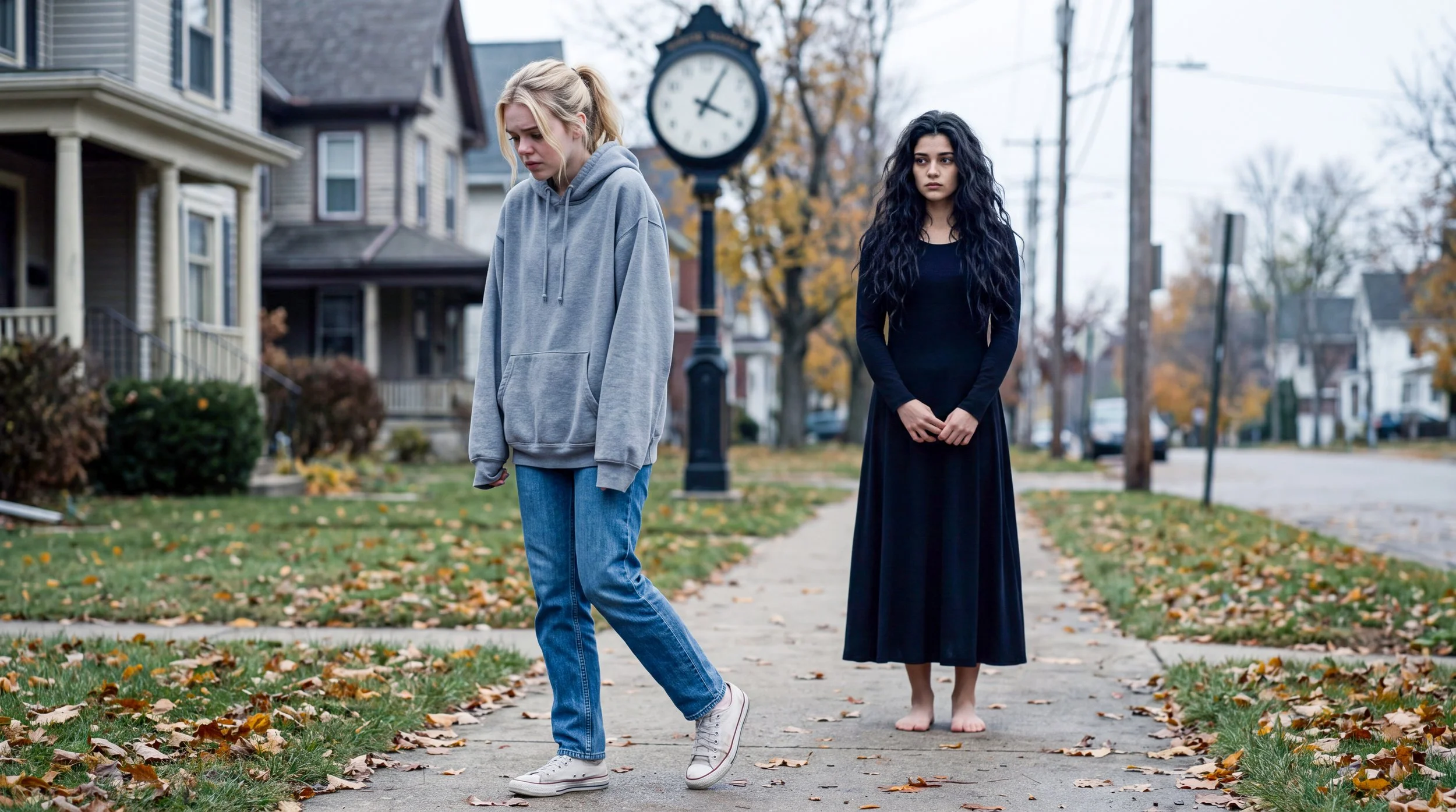
1. The house on the walk home did not go forward. Years had stopped in the front room. A woman had died of cancer and the clock had died with her. The daughter still walked in and out of the door as if time were a thing a child could keep for a man who would not keep it.
2. Her name in that house was often not her name. It was the dead woman’s. Face. Voice. Duty. Blame. Sara learned to answer both, because refusing the wrong name made the walls smaller.
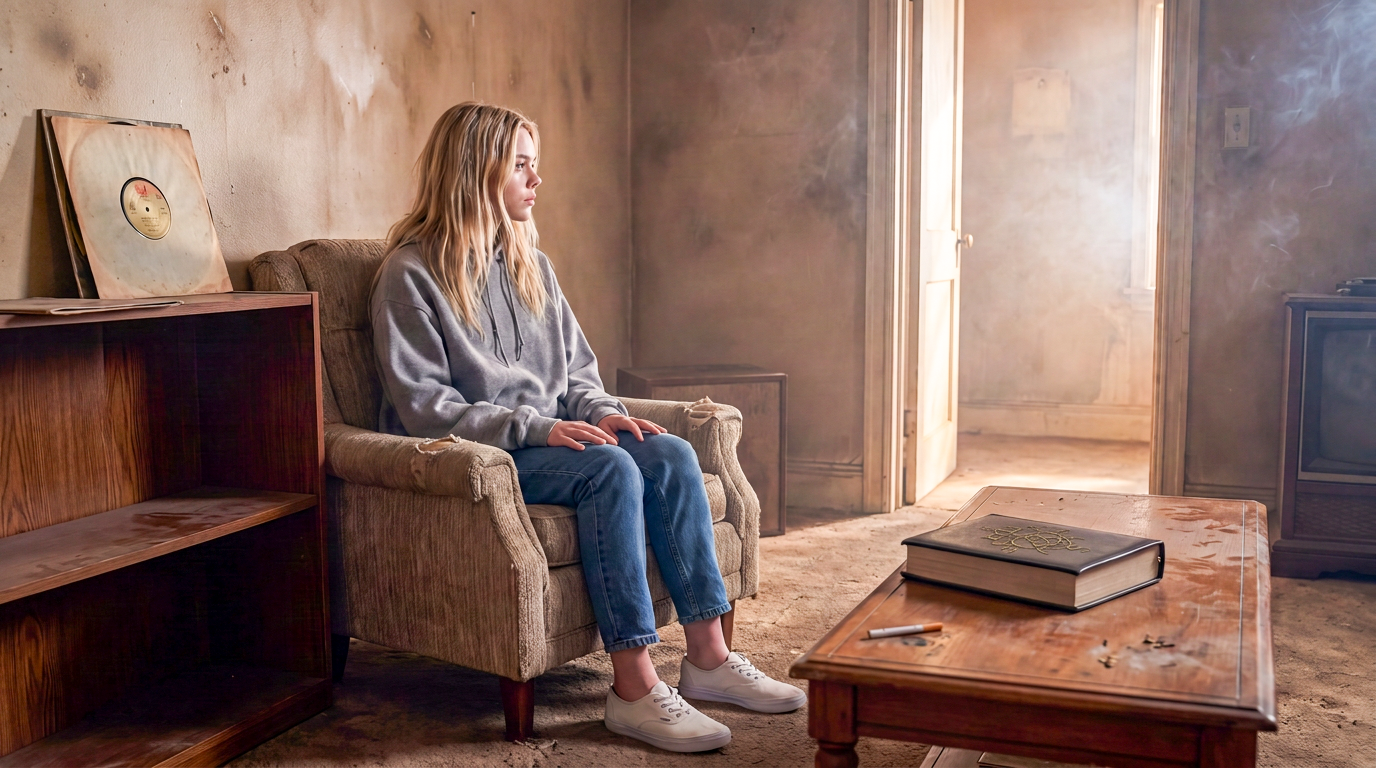
3. On the shelf, the mother’s vinyl waited like a relic. Favorite song. Favorite war. When the record turned, the house pretended the wife had only gone into the kitchen.
4. After the last bell Sara took the long way so Abigail could not close the gap. The gap closed anyway. Bare feet on the sidewalk. Autumn like a thin blade.
5. “Sara.”
6. She did not stop at first. Then she did. “What do you want?”
7. “To talk about what you are carrying.”
8. “You don’t know anything about me.” The shout came up raw. “You don’t know what I deal with every day. Stop acting like you do.”
9. Abigail did not borrow the pain. “I don't know this house. I know a body used as a tomb. I know a clock that will not move. I have been to that place.”
10. Sara’s anger tripped. “Why do you even care?”
11. “Because the flesh they hung a dead name on is still yours.”
12. Sara left her there and went inside the stopped clock of a house.
13. Night in that house was the true weather. Day could be buried under bells and trays. After sundown the walls remembered they were a mouth.
14. She sat on the bed with her knees up and listened. Down the hall: the slow step. A man walking toward a ghost he had decided still lived in the girl’s room.
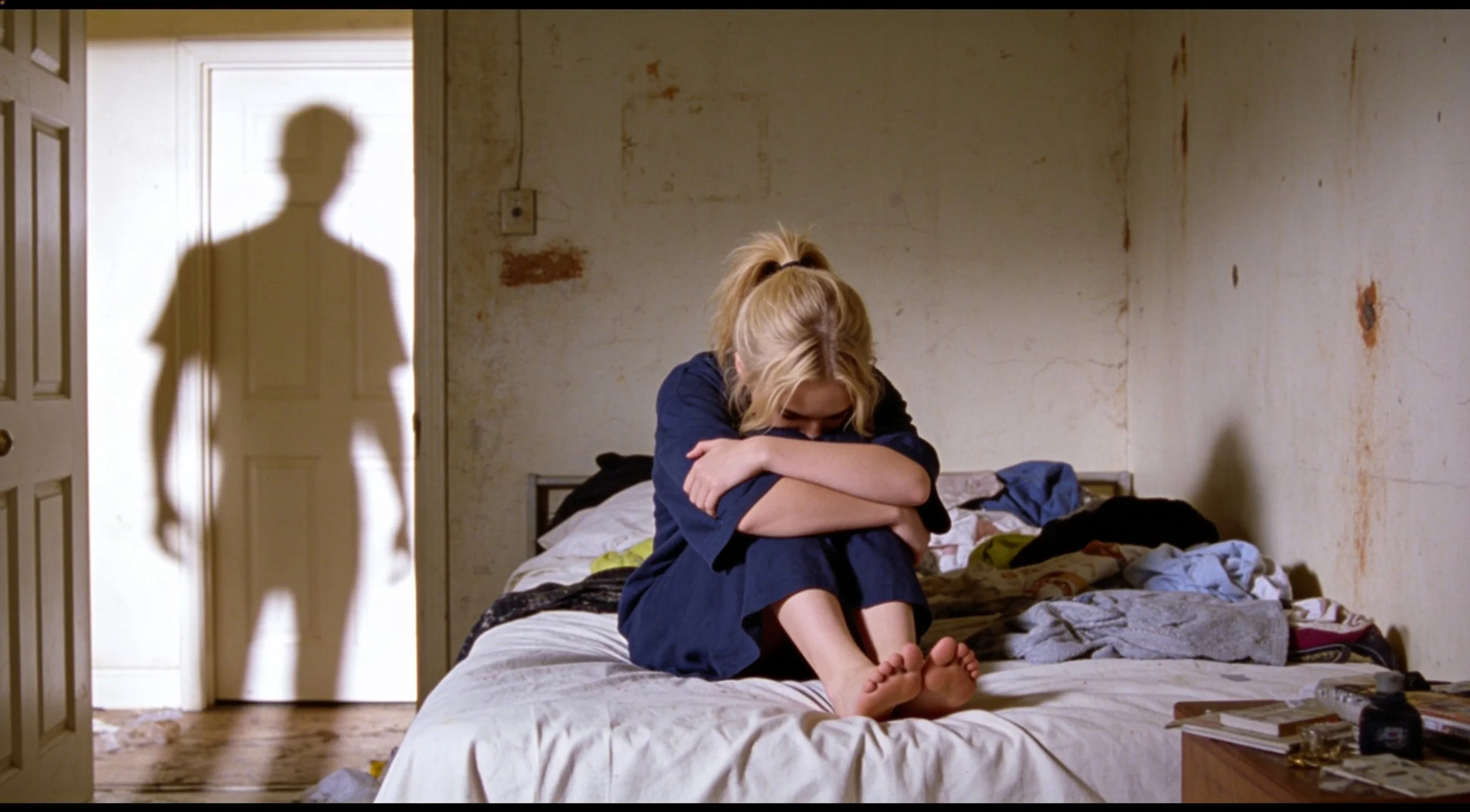
15. The door did not need a good lock. He stood in the frame. Whiskey on him, cigarettes in the paint, the dead woman’s absence sitting in the chair he would not look at.
16. “You still up?”
17. She could not answer. Throat shut. Blanket useless.
18. He used the dead name on her, or her name as if it were the dead name. The difference had rotted. “You think you can ignore me. You look at me like she did.”
19. He put the record on.
20. The mother’s song filled the room that should have been a daughter’s. That is the betrayal. Not the bottle. The song. The claim. A wife poured onto a girl who was still here.
21. What he took then is not written as a map. It is written as theft. He used the living body as the marriage bed of a woman in the ground. Sara left the room without leaving it. She had stopped crying a long time ago. She went somewhere the needle could not follow.
22. In that somewhere a voice she did not ask for stood in the trees and did not look away.
23. After, the record ran out. The house was a house again. He was a man who had not buried his dead. She was a girl who would have to walk to school in the morning with a hoodie for a second skin.
24. She did not sleep so much as wait for the light that made him smaller.
25. Near evening of another day a knock came that was not his step. Abigail on the porch, hands still, barefoot on the paint.
26. “What are you doing here?”
27. “I said I would come.”
28. Sara let her in against every lesson the lock had taught. Abigail took in the worn chairs, the smoke in the plaster, the shelf where the vinyl lived.
29. “This is not your fault. None of it. The dead are owed a grave. They are not owed your skin.”
30. “You can’t come here and fix it.”
31. “I didn’t come to fix his house. I came so you would not have to be the only one who knows what the song cost.”
32. She did not stay long. When she left, the dark in the doorway was not quite the same dark. On the table, before the door shut, a leather book that had not been there in the morning.
33. Sara did not open it yet. She sat with the closed book and the stopped clock and the knowledge that a second pair of eyes had seen the shelf.
34. Praise be to the sovereign flesh.
35. Let the hunger go unfarmed.
End of Mark 3